
Choosing the Right Fence in Louisiana: The Homeowner’s Playbook
Quick Answer: The right fence for your Louisiana home depends on what you actually need it to do, how long you want it to last, and how the weather will treat it. Wood (cedar, cypress, pine) is the most common residential choice for privacy and traditional looks. Aluminum gives you a low-maintenance ornamental fence that resists Louisiana humidity. Vinyl/PVC delivers privacy without staining or rot. Chain link is the most affordable for security and dog containment. Wrought iron is the premium ornamental option. Each material has a different lifespan in Louisiana climate, and the post system matters as much as the panels.
- Louisiana weather (heat, humidity, hurricane wind, termites, soggy soil) shortens fence lifespan faster than most homeowners expect.
- Wood fences (cedar, cypress, pine) deliver privacy and traditional looks; lifespan depends heavily on wood species and post system.
- Vinyl/PVC fences resist rot, termites, and staining; higher upfront cost but lower maintenance over 20+ years.
- Aluminum ornamental fences resist Louisiana humidity better than wrought iron; powder-coated finishes hold up for decades.
- Chain link is the most affordable per linear foot; galvanized or vinyl-coated options each have a different look + lifespan.
- Wrought iron is the premium ornamental option but needs annual maintenance to fight Louisiana humidity.
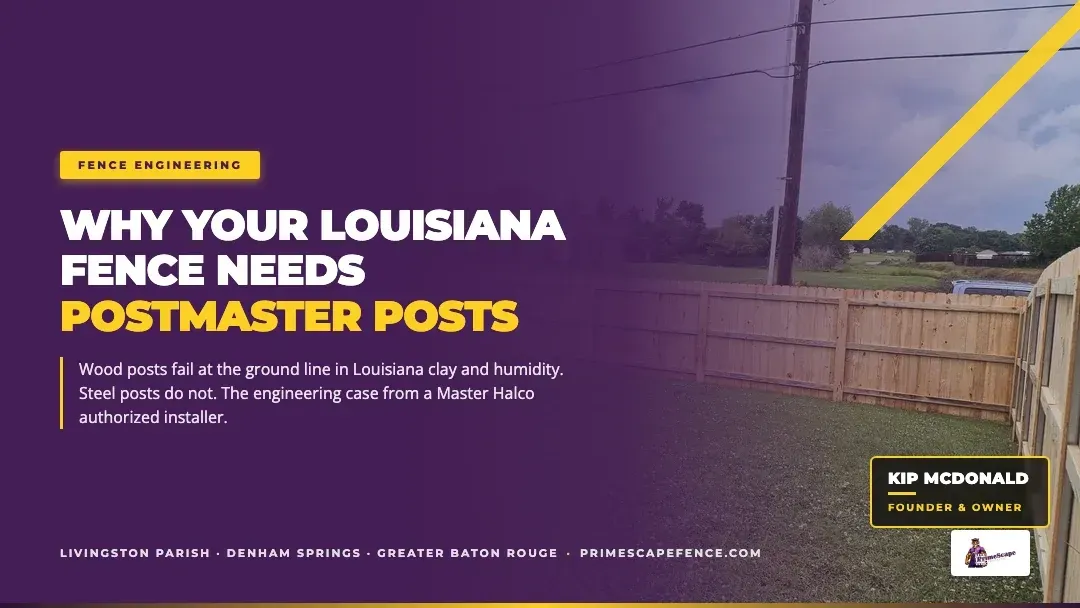
- The fence post matters as much as the fence material. Postmaster steel posts can extend any wood fence’s life by 2-3x in Louisiana conditions.
- Local codes + HOA rules dictate fence height, setback, and material. Verify before purchase. Most Livingston Parish residential zones allow up to 6ft (privacy) or 4ft (front yard).
Louisiana fences age fast. The same fence that lasts 20 years in Iowa might fail in 10 here. The reasons are not mysterious: heat softens lacquers and adhesives, humidity rots wood and corrodes hardware, hurricane wind tests every post in your line, soggy soil shifts foundations, and Formosan + native termites devour anything cellulose-based they can reach.
This guide is what we walk Livingston Parish, Denham Springs, and greater Baton Rouge homeowners through during the first call. It covers material selection, post systems, weather considerations, cost ranges, lifespan expectations, and the mistakes that cost homeowners a second fence install five years sooner than they should have needed one.
Planning a new fence in Louisiana? Call or text 225-316-2104 to talk to Kip McDonald about your project, or request a free fence quote online. Free on-site estimates across Livingston Parish, Denham Springs, and greater Baton Rouge.
Why Louisiana Weather Changes Fence Math
Most fence-buying guides treat fence selection as if the buyer lives in Kansas. They do not. The Louisiana climate adds five real failure modes that homeowners need to factor in.
Heat + UV damage
Direct sun in Louisiana summer regularly drives surface temperatures on dark fence pickets above 140°F. UV breaks down wood lignin, fades stains, hardens vinyl, and degrades powder-coat finishes. The
National Weather Service New Orleans / Baton Rouge office tracks the heat indexes that drive this exposure. Materials that hold up best to UV: aluminum (powder-coated), vinyl (UV-stabilized), and cedar (with annual stain).
Humidity + rot
The state’s annual average humidity sits in the high 70s%. Moisture in the wood structure plus warm temperatures equals fungal rot. The base of every wood fence post is the highest-risk zone. Post systems matter more than panel materials for fighting this.
Hurricane + storm wind
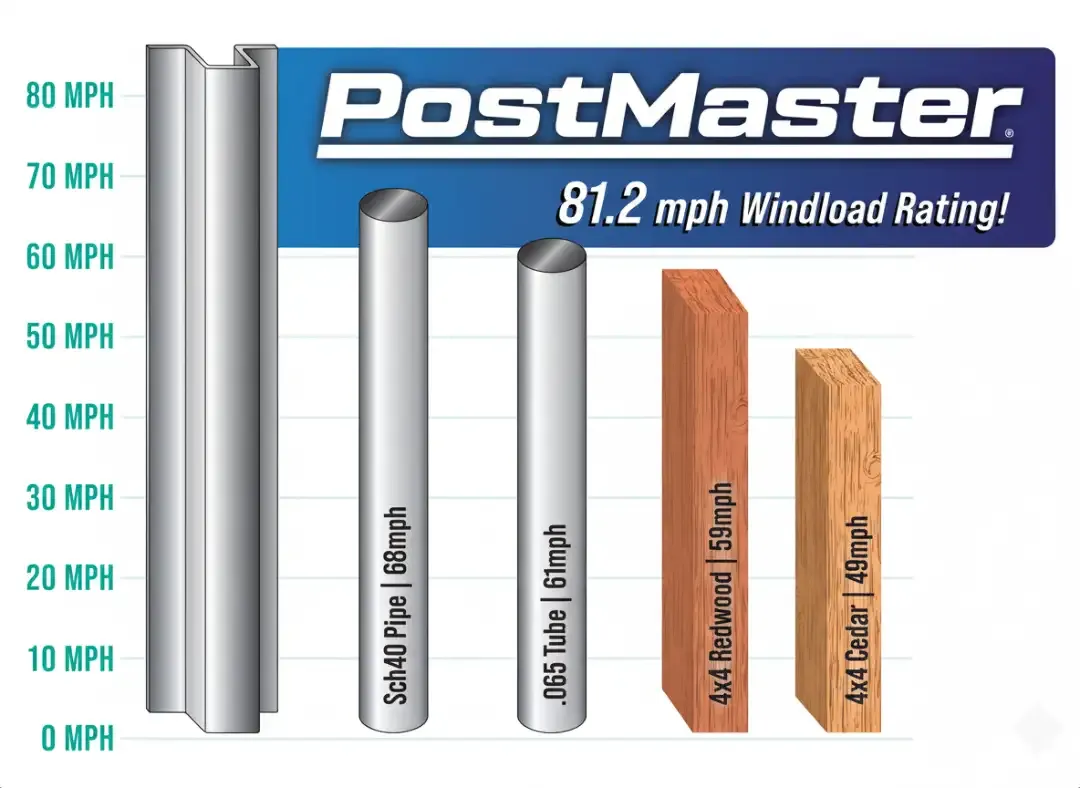
Louisiana sees real wind every season. Tropical storms and hurricanes deliver 50-110+ mph gusts. Standard wood posts set in concrete can shear at the ground line. Postmaster steel posts (rated for 130+ mph wind in some configurations) and ornamental aluminum with reinforced rails handle wind better. Per the
FEMA Coastal Construction Manual, properly engineered fence post systems materially reduce wind-damage replacement cycles in storm-exposed states.
Soil + drainage
Louisiana clay soils swell and shrink with moisture cycles. Concrete-set wood posts in clay often heave, sink, or tilt over 5-10 years. Steel post systems with proper drainage handle Louisiana soil better than poured concrete around wood.
Termites
Louisiana has both native subterranean termites AND the more aggressive Formosan subterranean termite. The
LSU AgCenter termite guidance documents how widespread the Formosan threat is across South Louisiana. Untreated wood at ground contact is termite buffet. Pressure-treated wood + steel or composite posts dramatically reduce termite risk.
The Five Main Fence Materials Compared
Most Louisiana residential fences fall into one of five material categories. Here is how they compare on the things that actually matter.
| Material | Lifespan (LA) | Cost per linear ft | Maintenance | Best For |
|---|---|---|---|---|
| Wood (cedar) | 15-25 yrs | $20-35 | Stain every 2-3 yrs | Privacy, traditional looks, character |
| Wood (cypress) | 20-30 yrs | $28-45 | Stain every 2-3 yrs | Premium privacy, Louisiana-native species |
| Wood (pressure-treated pine) | 10-15 yrs | $15-25 | Stain every 2-3 yrs | Budget privacy, ranch / agricultural |
| Vinyl / PVC | 25-40+ yrs | $30-55 | Wash annually, no stain | Privacy, low-maintenance |
| Aluminum (powder-coated) | 30-50+ yrs | $35-55 | Wash annually | Ornamental, pool fencing, low-maintenance |
| Chain Link (galvanized) | 15-25 yrs | $10-20 | Minimal | Security, dog containment, budget |
| Chain Link (vinyl-coated) | 20-30 yrs | $15-25 | Minimal | Security with cleaner look |
| Wrought Iron | 25-50+ yrs (with maintenance) | $35-70+ | Touch-up paint annually | Premium ornamental, historic looks |
Costs are typical 2026 Louisiana ranges for installed labor + materials and exclude custom design, gates, or unusual site conditions. Get a real on-site estimate before budgeting.
Wood fences: still the Louisiana favorite
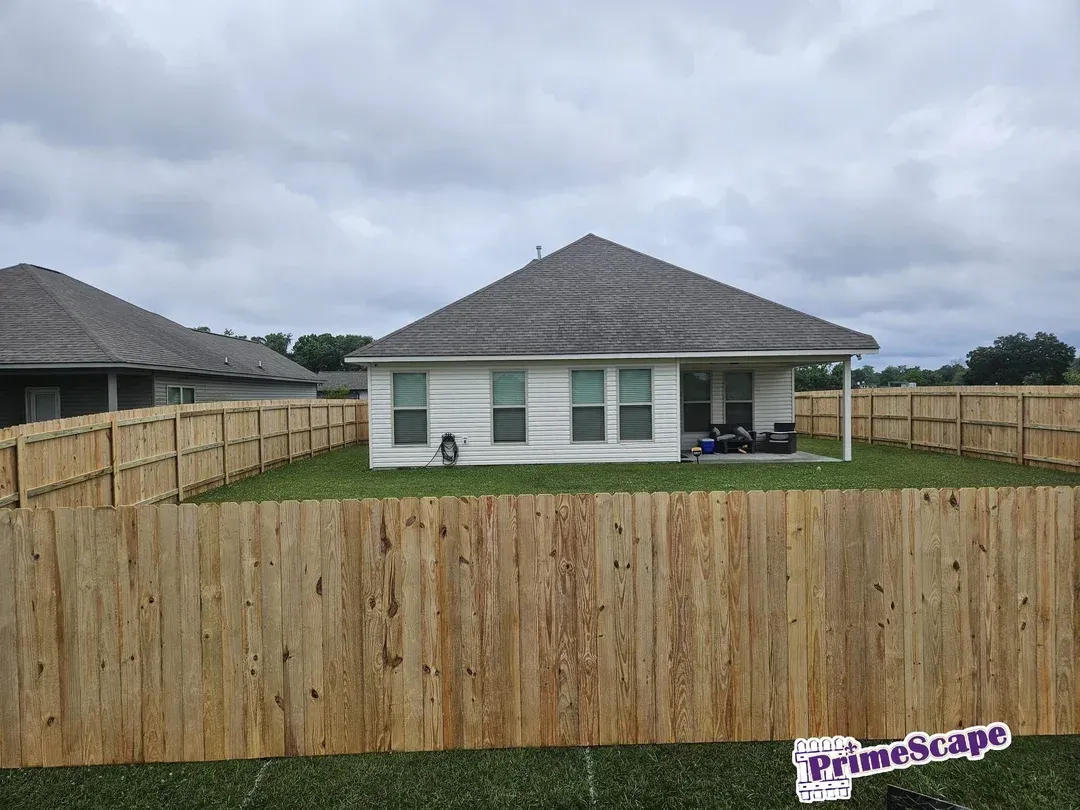
Wood fences are the most-requested residential fence in our service area. Three reasons: cost is reasonable, traditional looks suit most homes, and the Louisiana cypress + cedar tradition has been around for generations. The trade-offs are real.
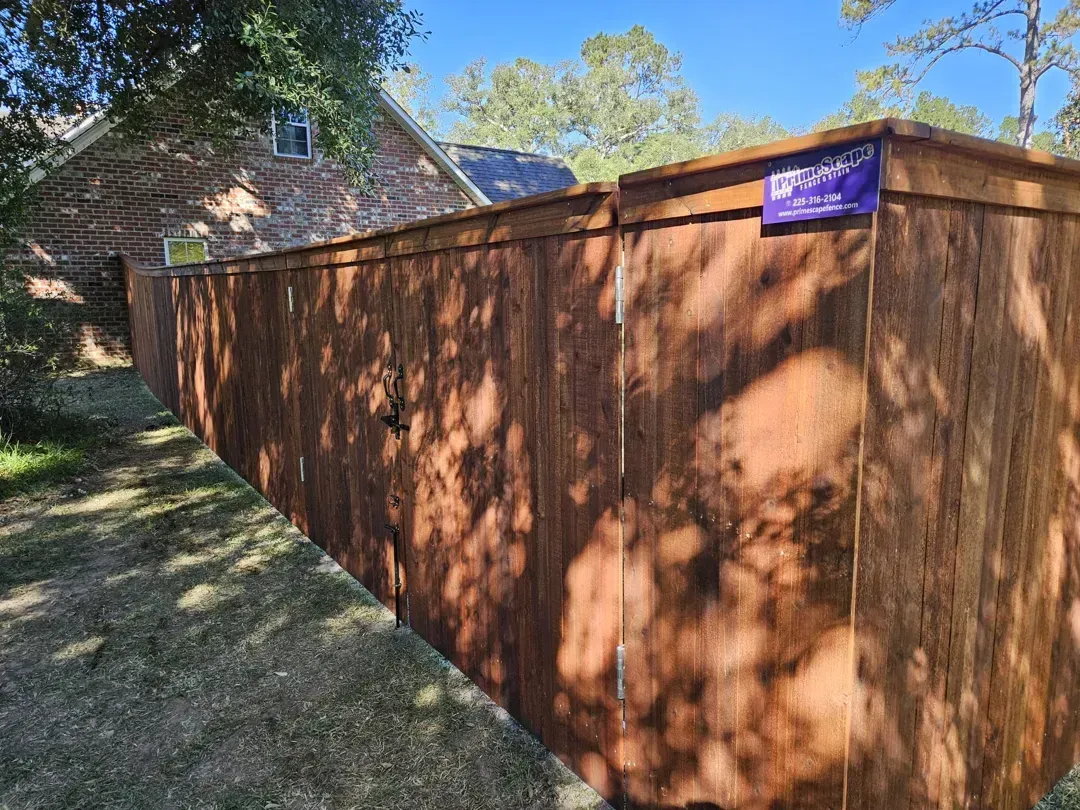
Cedar is the workhorse. Western Red Cedar holds up well against humidity + insects, takes stain beautifully, and runs 15-25 years in Louisiana climate with regular staining.
Cypress is the Louisiana-native species. Old-growth cypress was legendary for rot resistance; modern second-growth cypress is still excellent but not quite at heritage-cypress levels. Cypress runs 20-30 years and develops a beautiful gray patina if left unstained.
Pressure-treated pine is the budget option. Properly treated pine (ground-contact rated) holds up in Louisiana climate, but expect 10-15 years lifespan, not 20+. Pine fences need staining within the first year or two to prevent cupping + checking.
Postmaster post systems can extend ANY wood fence’s lifespan by 2-3x. The wood panels above ground sit on engineered steel posts that do not rot, do not get termite damage, and resist hurricane wind. We recommend Postmaster for any Louisiana wood fence install where the homeowner wants the fence to last past 20 years.
Vinyl / PVC fences: low-maintenance privacy
Vinyl and PVC fences trade higher upfront cost for very low long-term maintenance. No staining, no painting, no termite worries, no rot. Louisiana humidity and UV are real considerations: cheap vinyl can chalk, fade, or become brittle within 5-10 years. Premium UV-stabilized vinyl holds up for 25-40+ years. Worth specifying which grade you are getting.
Best fit: homeowners who value time-back over upfront savings and want privacy without recurring maintenance.
Aluminum fences: ornamental + low-maintenance
Aluminum is the dark-horse choice for Louisiana ornamental fencing. Powder-coated aluminum resists humidity, rust, and termite damage. It runs 30-50+ years with minimal maintenance. The look reads as ornamental (similar to wrought iron) but at lower weight and dramatically less maintenance.
Common uses in Louisiana: front yard ornamental fencing, pool fencing (most Louisiana parishes require pool fencing per state law), commercial property enclosures, decorative perimeter work.
The trade-off: aluminum does not give you privacy. It is see-through by design. If you want privacy AND ornamental, you typically need a vinyl or wood fence with aluminum-style decorative caps.
Chain link: budget + security
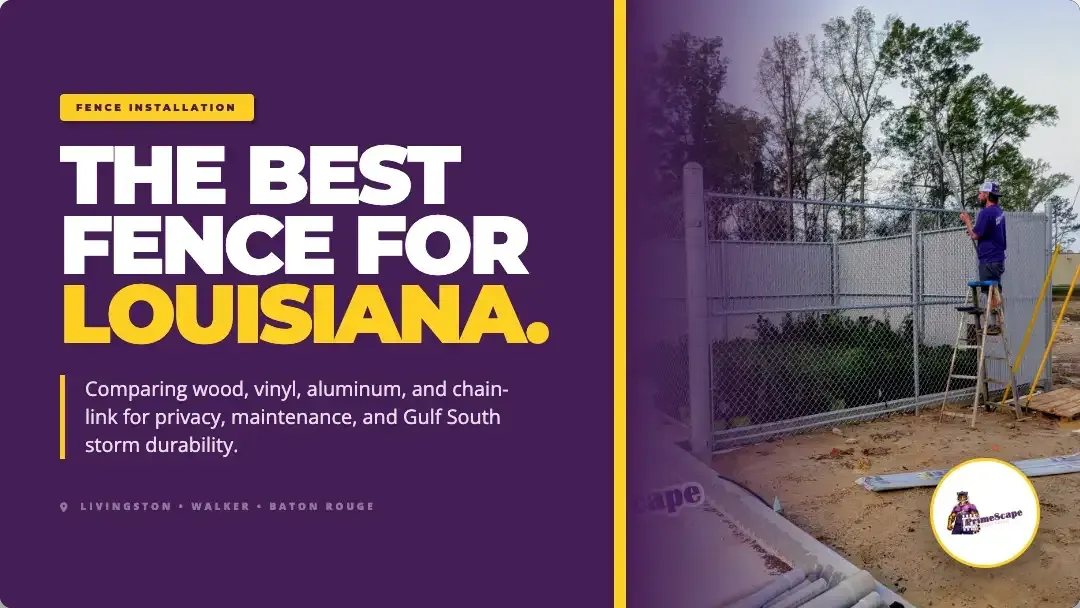
Chain link is the cheapest fence option per linear foot. Two grades worth knowing:
- Galvanized (the classic silver chain link): most affordable, lasts 15-25 years in Louisiana, looks utilitarian.
- Vinyl-coated (black or green coated chain link): slightly more expensive, lasts 20-30 years, looks far cleaner.
Best fit: large lots needing perimeter security, dog containment, commercial properties, or budget-driven first fences. Chain link is also the most common temporary or job-site fence material.
Wrought iron: premium + maintenance-intensive
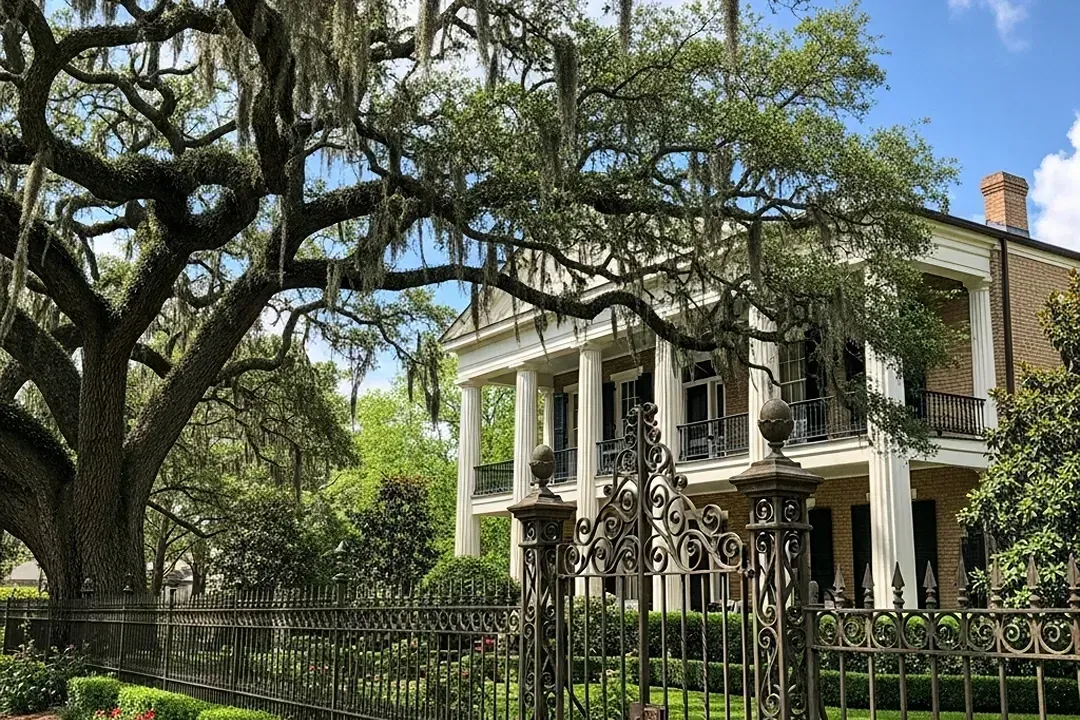
Wrought iron is the historical premium for ornamental fences. The look is unmatched (think antebellum-era ironwork in New Orleans, French Quarter wrought iron, classic Garden District perimeter fences). Lifespan is long IF maintenance is consistent. The Louisiana humidity issue: wrought iron rusts if any paint chips, and rust spreads fast.
Best fit: historic-style homes, premium ornamental installs, properties where the look matters more than ongoing maintenance time. Plan for annual paint touch-ups + every 10-15 year full repainting.
Why the Fence Post Matters Just as Much as the Material
Most fence failures in Louisiana happen at the post line, not the panel. A wood panel can last 20 years; a poorly set wood post in Louisiana clay can fail at 8.
Traditional wood post + concrete
The default. A pressure-treated wood 4×4 set in concrete. Cheap, easy, ubiquitous. Failure modes in Louisiana:
- Rot at the soil line (where concrete meets wood meets moisture)
- Concrete heave or settling in clay soil
- Wind shear during hurricane gusts
- Termite damage above the concrete line
Lifespan in Louisiana: 8-15 years for the post, even if the panels above could last longer.
Postmaster steel post
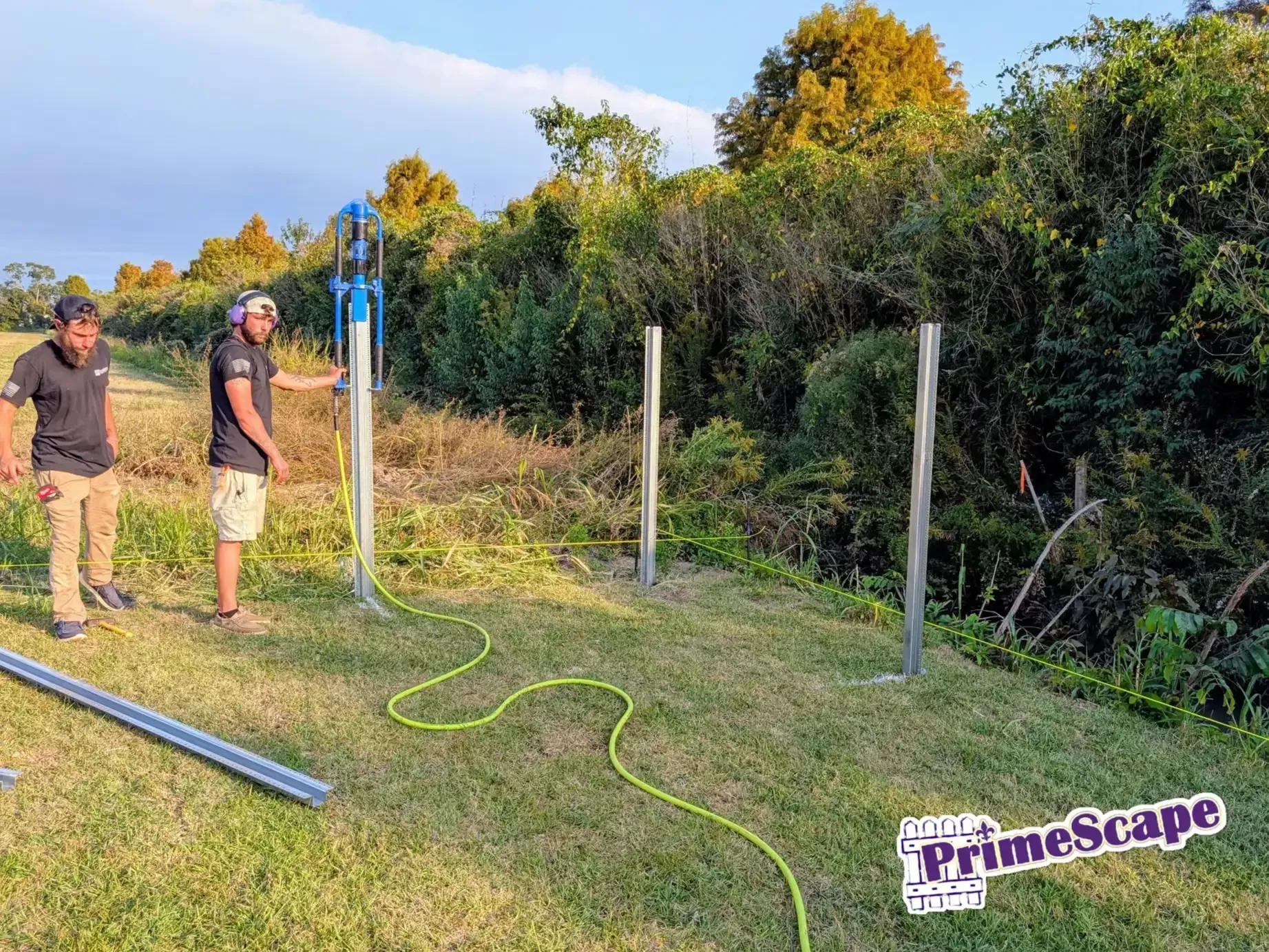
A galvanized steel post system designed to support wood, vinyl, or composite panels. The post does not rot, does not get termite damage, and is rated for higher wind loads than traditional wood posts. Wood panels attach to the steel via specialized brackets.
Lifespan in Louisiana: 30-50+ years for the post itself, with panels replaceable as they age.
The cost premium for Postmaster posts is usually 15-25% of total fence install cost, and they typically pay back inside 10 years by avoiding mid-life replacement.
No-dig fence post systems
For situations where digging is impractical (rocky soil, dense root systems, narrow setbacks), no-dig systems use a driven steel post installed without concrete. Faster installation, less ground disturbance, comparable wind ratings to concrete-set systems for many use cases.
Best fit: properties with difficult access, properties where speed matters, or budget projects where post replacement decades later is acceptable.
How to Match a Fence to Your Use Case
Material is one variable. Use case + site conditions + lifespan goals are the others. Here is the decision framework.
“I want maximum privacy and traditional looks”
→ Wood (cedar or cypress) on Postmaster posts. Highest privacy. Traditional look. 20-30 year lifespan with regular staining. Mid-tier cost.
“I want privacy without ongoing maintenance”
→ Wood (cedar or cypress) on Postmaster posts. Highest privacy. Traditional look. 20-30 year lifespan with regular staining. Mid-tier cost.
“I want an ornamental look that does not need annual painting”
→ Powder-coated aluminum. 30-50+ year lifespan. Wash annually. Higher cost than chain link but lower than wrought iron.
“I want maximum security or dog containment on a budget”
→ Vinyl-coated chain link. Best cost-per-foot. 20-30 year lifespan. Easy to install gates + lock points.
“I want the historical look and I am committed to maintenance”
→ Wrought iron. 25-50+ year lifespan with consistent paint touch-up. Highest cost. Highest maintenance.
“I want pool fencing that meets Louisiana state code”
→ Powder-coated aluminum (typically 4ft height for pool fencing). State law requires specific spacing + self-closing gates. Verify with your parish + insurance before purchase.
“I have a large rural lot and need fencing for livestock or perimeter”
→ Galvanized chain link, board-and-rail wood, or wire ranch fencing. Different ranch-rated specifications. Talk to your fence company about agricultural use early.
Cost Ranges + What Drives Them
Louisiana fence installs in 2026 typically run within these ranges. Real quotes depend on linear footage, site access, ground conditions, gate count, and any custom design.
| Project type | Length | Material | Typical installed cost |
|---|---|---|---|
| Residential privacy (cedar, 6ft) | 150 lin ft | Cedar + Postmaster posts | $5,000-7,500 |
| Residential ornamental (aluminum, 4ft) | 100 lin ft | Powder-coated aluminum | $4,500-7,000 |
| Residential security (chain link, 4ft) | 200 lin ft | Vinyl-coated chain link | $3,500-5,500 |
| Residential vinyl privacy (6ft) | 150 lin ft | Premium UV-vinyl | $6,000-9,000 |
| Premium wrought iron (4ft) | 100 lin ft | Wrought iron + paint | $5,000-9,500 |
| Commercial chain link (6-8ft) | 300+ lin ft | Galvanized commercial-grade | $5,000-9,000 |
| Pool fencing (aluminum, 4ft) | 100 lin ft | Code-compliant aluminum + self-closing gates | $4,500-7,500 |
Costs include labor + materials + standard gates. Excluded: removal of existing fence, ground prep, custom gate engineering, decorative caps + post lights, automatic gate motorization, custom paint or stain finishes.
What pushes cost up
- Removing an existing fence (factor: 10-25% of new fence cost)
- Difficult ground conditions (rocky, root-bound, high water table)
- Long runs without truck access (manual material carry)
- Multiple gates or automatic-gate motorization
- Custom gate designs or decorative features
- Premium wood species (cypress vs. pine)
- Postmaster post upgrade over traditional posts (15-25% premium)
What keeps cost down
- Straight runs with good truck access
- Standard heights (4ft, 5ft, 6ft); custom heights add 10-20%
- Standard pickets / panels without custom design
- Removing your old fence yourself before install day
- Off-peak installation (winter months in Louisiana)
- Bundling multiple fences (front + back yard same install)
Need real numbers for your specific project?
Request a free fence quote and we will walk your property, measure the run, and give you an honest estimate with no surprises.
Local Codes, HOA Rules, and What Most Homeowners Miss
Before you buy a fence, verify the rules that govern your property. Three layers apply.
Parish + city zoning
Louisiana parishes have residential zoning rules that dictate maximum fence height (typically 6ft in side + back yard, 4ft in front yard), setback requirements (distance from property line), and material restrictions in some HOA-overlay zones.
For Livingston Parish, Denham Springs, Walker, Watson, and most BR metro suburbs: 6ft privacy fencing is standard in side + back. Front-yard fencing is usually restricted to 4ft and often requires open-style (ornamental, picket).
HOA covenants
Many Louisiana subdivisions enforce stricter rules than parish zoning. Common HOA restrictions:
- Approved material list (often vinyl or aluminum only; some HOAs prohibit chain link)
- Stain color approval requirement
- Architectural review committee submission before install
- Specific picket style or post cap requirements
Check your HOA covenants BEFORE ordering materials. Some HOAs require approval that takes 30-60 days.
Property line + survey
Fences MUST be set inside your property line, not on it. Encroachment over the property line creates legal liability and can require removal. If you do not have a recent survey, hiring a licensed surveyor for $400-800 is worth the cost on any fence install over $3,000.
A common mistake: assuming the old fence was on the property line. The old fence may have been built years ago without survey verification.
Utility marks (Louisiana 811)
Before any post hole gets dug, call
Louisiana 811
for utility marks. This is free, legally required, and prevents catastrophic gas, water, or fiber-optic damage. Reputable fence companies (Primescape included) handle this as part of every install.
Common Questions Louisiana Homeowners Ask About Fence Selection
These come up most often during the first call.
How long should a fence last in Louisiana climate?
Wood fences (cedar, cypress) typically last 15-25 years with regular staining and proper post systems. Pine runs 10-15 years. Vinyl/PVC runs 25-40+ years. Powder-coated aluminum runs 30-50+ years. Chain link runs 15-30 years depending on grade. Wrought iron can run 25-50+ years with consistent maintenance. The fence post matters as much as the fence material. Postmaster steel posts can extend any wood fence’s life by 2-3x.
What is the cheapest fence material per linear foot?
Galvanized chain link is the cheapest, typically $10-20 per installed linear foot. Vinyl-coated chain link runs $15-25. Pressure-treated pine wood fences run $15-25. Aluminum, vinyl, cedar, and wrought iron all run higher. Cheapest is not always best value when factoring in lifespan and maintenance.
Do I need a permit to install a fence in Louisiana?
Depends on parish + city. Most Livingston Parish + greater Baton Rouge residential fence installs do not require a city building permit, but you should verify with your parish + check HOA covenants. Pool fencing has specific state-code requirements regardless of permit status. Commercial fencing often requires permits.
Can my fence go on the property line?
No. Fences should be set INSIDE the property line, not on it. Encroachment over the line creates legal liability and can require removal at your cost. A current survey (from a licensed Louisiana surveyor) clarifies your boundary before install. Reputable fence companies will not install on or over property lines without survey documentation.
How long does fence installation take?
Most residential fence installs in our service area take 1-3 days for projects under 300 linear feet, longer for larger projects or difficult site conditions. Cure time for concrete-set posts is typically 24-48 hours before panels attach. Postmaster steel post systems are faster (no cure time).
Should I remove my old fence myself to save money?
Sometimes yes, sometimes no. If you have the time, equipment, and disposal capability, doing your own demo can save 10-20% of project cost. If demo gets in the way of the install schedule or creates new property damage (broken landscaping, tire ruts), the savings disappear. We can quote with or without demo included so you can decide.
Will my insurance cover fence storm damage?
Most Louisiana homeowner policies cover fence damage from named storms, hail, and wind, subject to your deductible. Coverage varies by policy. After a storm, document damage with photos before any cleanup, file the claim promptly, and get a written estimate from a licensed contractor before agreeing to a settlement. We can document storm damage in a format that supports your claim.
Recent Posts